
Our Business
Atlantic LNG Company purchases gas from suppliers and sells freight on board to customers from its Point Fortin port in respect of Trains 1, 2 and 3. With regard to Train 4, Atlantic operates as a processor of gas.
Atlantic supplies LNG on contract to buyers that are subsidiaries of our “Members” BP, BG, Repsol YPF and GDF Suez. Atlantic does not currently engage in spot market transactions.
Our operations
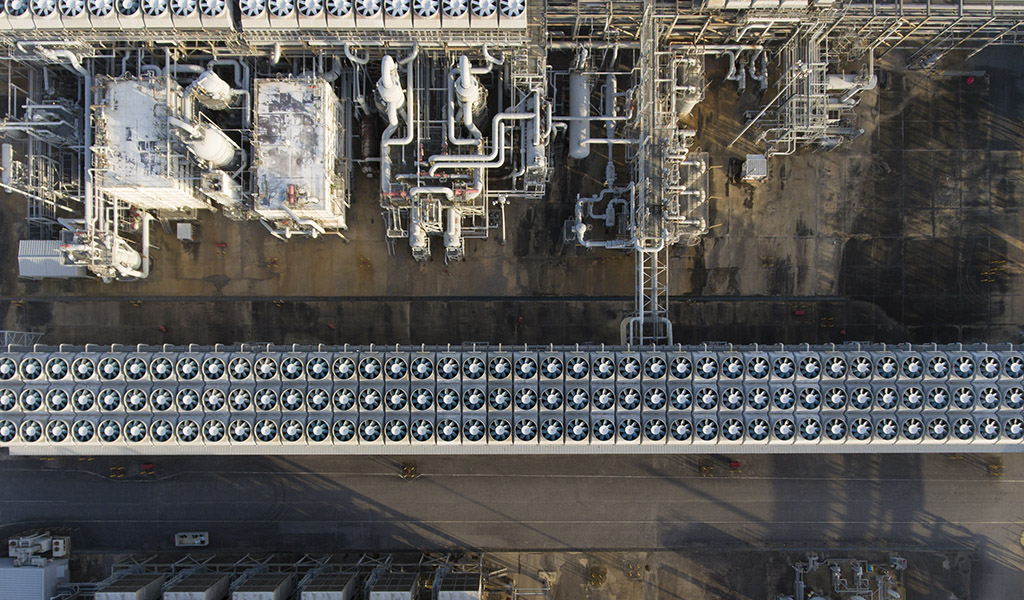
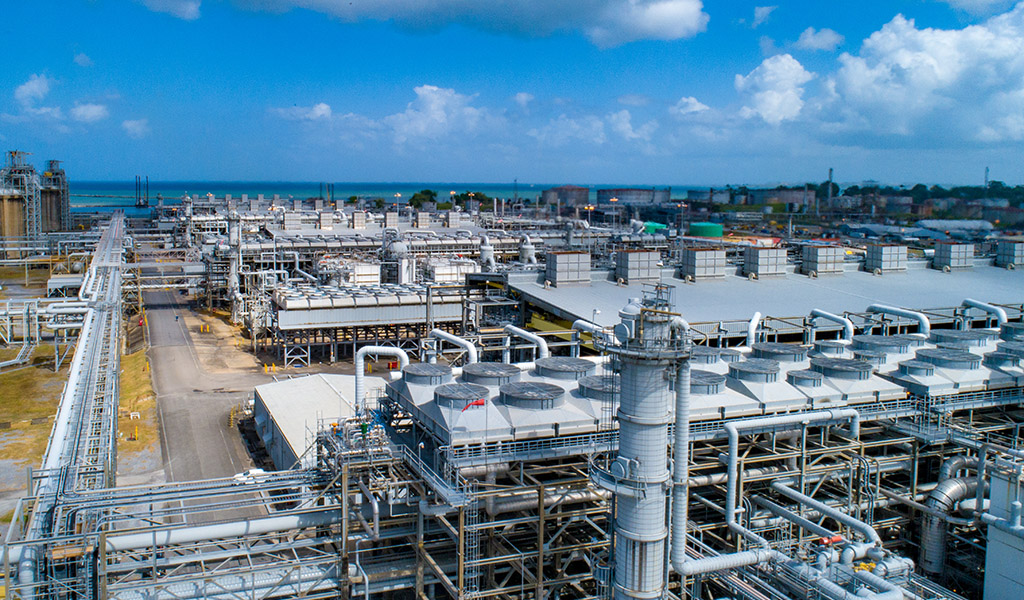
There are four liquefaction units (called “Trains”) located on our company’s 84 hectare complex. The Trains are owned separately, but a joint use and operating agreement among owners allows them to be run in combination, sharing common assets and costs.
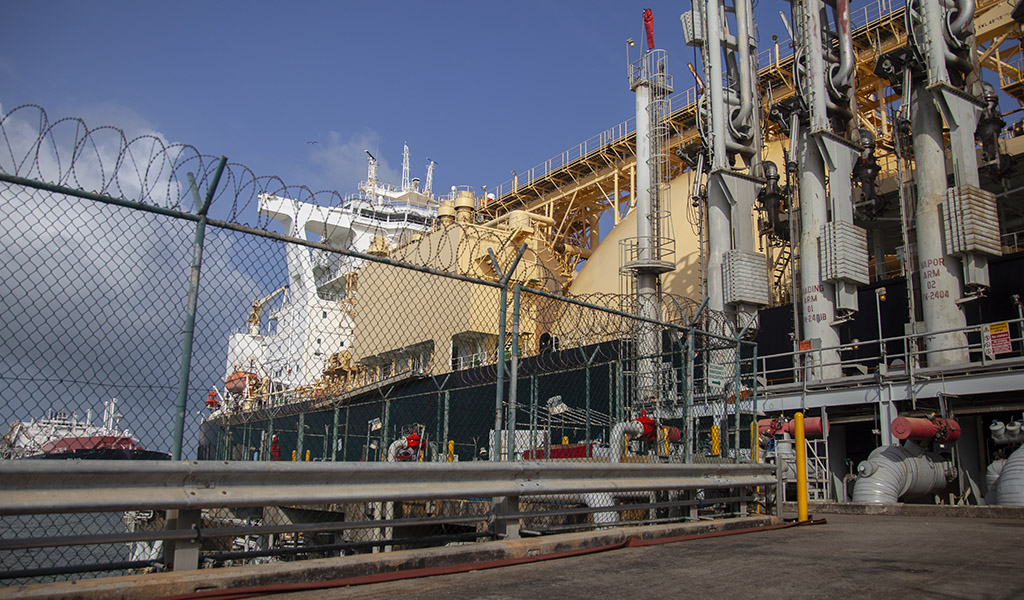
Our company’s total production capacity is 15 million metric tonnes per annum (mmtpa). Atlantic’s facilities include four tanks, a port area with two 700 metre jetties, and an approach channel and turning basin used by LNG carriers to arrive at the jetties. LNG carriers of up to 145,000 cubic metres in size can be accommodated. Carriers are filled with LNG via loading arms located at each jetty.
Our Trains use an improved version of the ConocoPhillips Optimised Cascade Process, a technology first employed successfully at the ConocoPhillips’ plant in Kenai, Alaska, built in 1969. Plate-fin heat exchangers support the cooling process, with propane, ethylene and methane used as refrigerants. GE Frame 5D gas turbine drives are employed and parallel compressor units afford two-train reliability within the single-train design.
Our Competitive Edge
Atlantic LNG is the largest supplier of LNG to the United States. Our competitive position in the LNG market is based on low delivery costs to the US. Transportation costs from Trinidad are 20 to 30 percent below the transportation costs from West Africa or North Africa. When coupled with the fact that Atlantic LNG’s installed capital base is low cost, the company has a powerful competitive advantage.
For any given market price for gas in the US, more value is left over for Trinidad and Tobago after deducting transportation and capital costs, than for LNG netted back to any other country in the world today.
Gas Reserves
Twin-island republic Trinidad and Tobago lies at the southernmost end of a chain of islands that stretches from South America to Cuba. Trinidad is 4,828 square kilometers in area and rests on the continental shelf 11 kilometres off the coast of Venezuela. Tobago is to the north-east of Trinidad and is 300 square kilometers in area. The republic’s population is 1.3 million. The official language is English.
Exploration activities conducted after 1992 have yielded most of today’s reserves. The country’s gas industry has been growing at over 10% per annum since 1988.